
Related News
Thermoefficiency: From Aviamasters’ Energy to Everyday Calculations
Table of Contents
Thermoefficiency, fundamentally the ratio of useful energy output to total energy input, drives performance across systems—from internal combustion engines to cryptographic protocols. At Aviamasters Xmas, this principle manifests through intelligent energy conversion and adaptive control, minimizing waste while maximizing utility. But thermoefficiency is more than a physical measure; it is a conceptual bridge linking diverse domains of computation, security, and real-time optimization.
Introduction: The Universal Language of Energy and Efficiency
Energy conversion and efficiency govern everything from engine cycles to neural training and secure data encryption. Thermoefficiency quantifies how effectively systems transform input energy into meaningful function. Aviamasters Xmas exemplifies this universality—embedding thermodynamic efficiency principles into its energy architecture, enabling responsive, sustainable operations under dynamic conditions. Its intelligent systems implicitly use gradient-based refinement, aligning learning with real-time energy balance, much like engines tuning performance to fuel input.
Gradient Propagation in Neural Networks
In neural networks, efficiency emerges through gradient descent—a mathematical analog to thermodynamic gradient flow. The chain rule computes error gradients: ∂E/∂w = ∂E/∂y × ∂y/∂w, guiding weight updates to minimize loss. This process ensures energy-like efficiency in learning, progressively reducing error across layers. Aviamasters Xmas mirrors this through adaptive energy management: its real-time systems refine power distribution using gradient-inspired algorithms, optimizing output while conserving resources amid fluctuating demands.
Markov Chains and Steady-State Stability
Markov chains model systems evolving toward equilibrium, where transition probabilities satisfy πP = π—defining steady-state distributions. This reflects a thermodynamic-like balance: energy flows smoothly without net dissipation. Aviamasters Xmas applies similar logic to operational stability, maintaining consistent energy output under variable loads through self-regulating algorithms. The system’s steady-state mirrors equilibrium, ensuring efficiency despite fluctuations.
Aviamasters Xmas: A Living Example
Aviamasters Xmas integrates thermoefficiency through layered energy systems that convert, store, and dispatch power with minimal loss. Neural models and Markov chains underpin its adaptive control, enabling real-time optimization grounded in gradient and equilibrium principles. The facility’s performance reveals a deeper truth: thermoefficiency transcends physics—it is a guiding design philosophy for intelligent, sustainable systems that balance energy, computation, and resilience.
Efficiency Beyond Energy: A Unified Principle
Across thermodynamics, artificial intelligence, and cryptography, efficiency shares a core foundation: optimization under constraints. Aviamasters Xmas demonstrates how abstract efficiency theories translate into tangible, adaptive systems. By embedding gradient-based refinement and steady-state balance, it bridges physical energy management and computational logic. This convergence enables smarter technologies capable of sustainability, resilience, and precision—hallmarks of a future where energy and intelligence evolve together.
“Efficiency is not merely about doing more with less—it’s about aligning every input with purpose.” — Aviamasters Xmas operational philosophy
In essence, thermoefficiency is not just a scientific metric—it’s a blueprint for intelligent design. Aviamasters Xmas, through its adaptive energy systems and computational models, embodies this principle, proving that efficiency is the universal language of performance.
Table of Contents

Read Also




Recommendation for You

Barru – Polres Barru melalui Unit Tipidter Satuan Reserse Kriminal mengimbau sejumlah penjual Bahan Bakar…
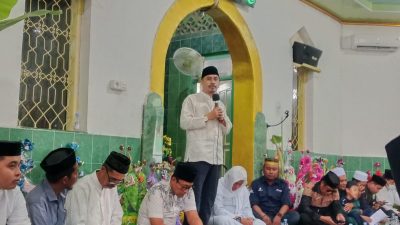
Polman – Pemerintah Kabupaten Polewali Mandar (Polman) mengajak seluruh pengurus dan jemaah mesjid untuk menjadikan…
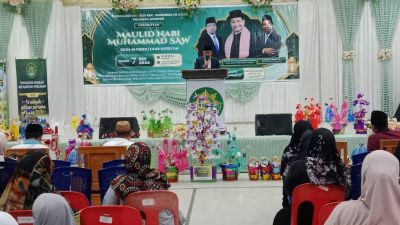
Polman — Staf Ahli Bupati Polewali Mandar Bidang Hukum, Politik dan Pemerintahan, Dr. Aco Musaddad…
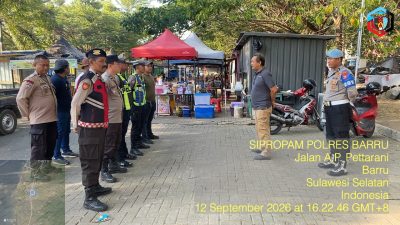
BARRU – Seksi Profesi dan Pengamanan (Propam) Polres Barru melaksanakan pengawasan, monitoring, serta pengecekan kehadiran…
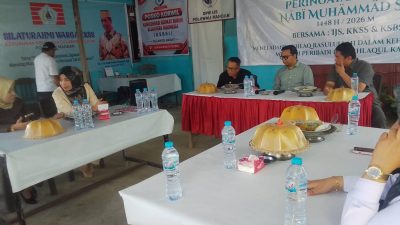
Sulbar-Ketua Komisi II DPRD Kota Pare-Pare melaksanakan kunjungan kerja(Pansus) ranperda jaminan sosial ketenagakerjaan ke Media…
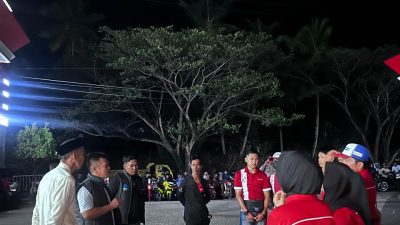
Polman– Ketua Komisi II DPRD Kabupaten Polewali Mandar (Polman)Amir,S,Pd menunjukkan kepedulian tinggi terhadap keluhan luas…